
electronics assembly
The aerospace industry stands as one of the most demanding and technologically advanced sectors, where reliability, precision, and safety are paramount. In such a high-stakes environment, the question arises: Can electronics assembly meet the rigorous standards required for aerospace applications? The answer lies in the evolution of electronics assembly technologies and the stringent processes implemented to ensure the reliability and performance necessary for aerospace operations.
Modern aerospace systems rely extensively on electronic components and systems to enable a wide range of functionalities, including navigation, communication, avionics, and flight control. From cockpit displays and communication systems to engine controls and flight management systems, electronic assemblies play a critical role in the operation and safety of aircraft and spacecraft. As such, the reliability and performance of these electronic assemblies are scrutinized to the highest degree to meet the stringent requirements of the aerospace industry.
One of the key challenges in utilizing electronics assembly in aerospace applications is ensuring reliability under extreme operating conditions, including high temperatures, vibration, shock, and radiation. Aerospace electronic assemblies undergo rigorous testing and qualification processes to validate their performance in these harsh environments. Components are selected for their ability to withstand temperature fluctuations and mechanical stresses, while advanced materials and manufacturing techniques are employed to enhance durability and reliability.
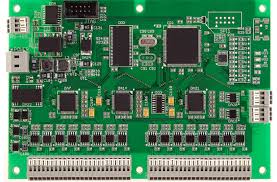
Can an electronics assembly be used in aerospace applications?
Furthermore, electronics assembly for aerospace applications adheres to strict quality standards and regulatory requirements to ensure compliance with industry norms and safety regulations. Standards such as AS9100 for aerospace quality management and IPC-A-610 for electronic assembly acceptance criteria provide guidelines and criteria for manufacturing processes, materials selection, and inspection procedures. By adhering to these standards, aerospace manufacturers can demonstrate the reliability and quality of their electronic assemblies, instilling confidence in customers and regulatory authorities.
Moreover, electronics assembly in aerospace applications incorporates redundancy, fault tolerance, and fail-safe mechanisms to mitigate the risk of system failures and ensure continuous operation. Redundant systems and components are integrated to provide backup functionality in the event of a failure, while fault-tolerant architectures detect and isolate errors to prevent catastrophic failures. Fail-safe mechanisms automatically switch to backup systems or safe modes to maintain the integrity and safety of the aircraft or spacecraft.
In addition to reliability and safety considerations, electronics assembly in aerospace applications must also address stringent size, weight, and power constraints. Miniaturization and lightweight design techniques are employed to optimize space and weight while maximizing performance and functionality. Advanced packaging technologies such as multi-layer PCBs, chip-scale packaging, and 3D integration enable high-density electronic assemblies with reduced footprint and weight, making them well-suited for aerospace applications where space and weight are at a premium.
Furthermore, advancements in electronics assembly technologies, such as surface mount technology (SMT), additive manufacturing, and advanced materials, continue to push the boundaries of performance and reliability in aerospace applications. Additive manufacturing techniques, such as 3D printing, enable rapid prototyping and customized component fabrication, reducing lead times and improving design flexibility. Advanced materials, such as high-temperature polymers and ceramic substrates, offer enhanced thermal and mechanical properties, making them ideal for aerospace electronic assemblies operating in extreme environments.
In conclusion, electronics assembly has become an indispensable enabler of innovation and performance in aerospace applications, providing the critical functionality and reliability necessary for the safe and efficient operation of aircraft and spacecraft. Through rigorous testing, adherence to quality standards, and continuous technological advancements, electronic assemblies continue to meet the demanding requirements of the aerospace industry, paving the way for the next generation of aerospace systems and technologies.
